Drive Sally
Achieving Record Fleet Utilization
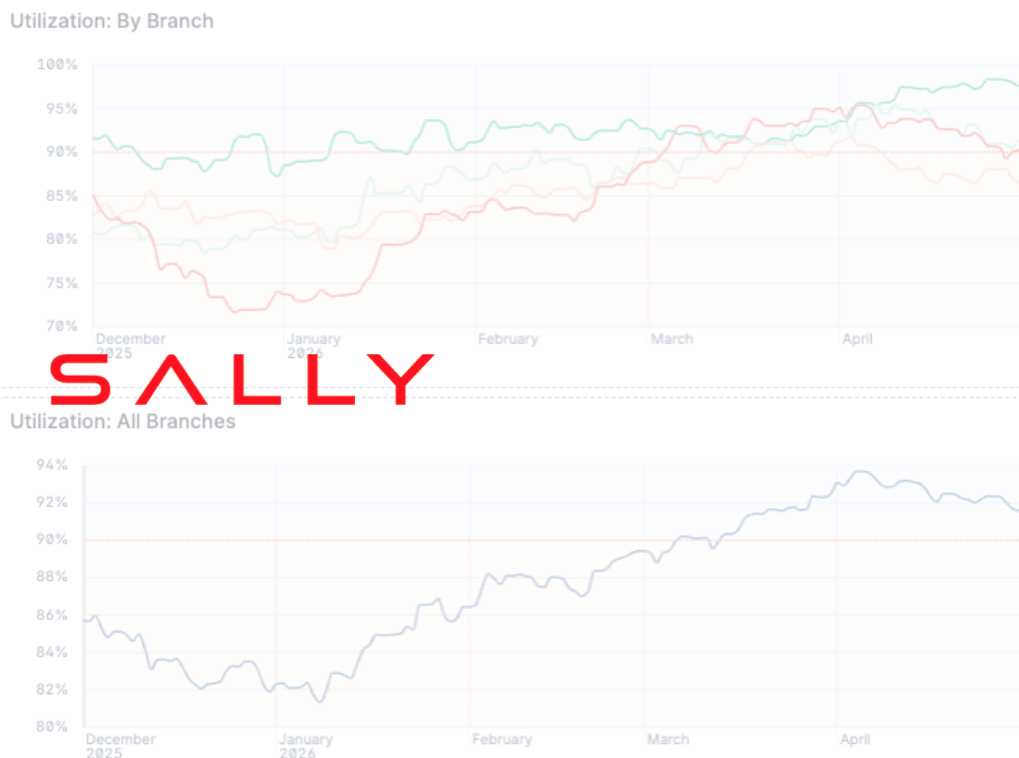
Transforming utilization from a non-profitable 82% to a sustained and profitable 90%+ by redesigning the customer and vehicle lifecycle.
THE CHALLENGE
Drive Sally operates a fleet of more than 2,000 vehicles rented to professional drivers across multiple U.S. markets. Fleet utilization is the fundamental driver of the business: an idle vehicle continues to generate financing, depreciation, insurance, storage, and other costs while producing no rental revenue.
Fleet utilization had settled around 82%, below the level required for profitability.
The solution that others in the business championed was to sell harder. A six person sales team was heavily pressured to get more customers into vehicles, which would surely improve utilization. The thought within the business was that utilization was a sales issue.
However sales are only a piece of the puzzle, and selling harder would not solve the underlying business problems that are impacting utilization and profitability.
A deeper analysis of the drivers of utilization, combined with an data-driven iterative approach towards improving the underlying issues, led to a fundamentally new operational strategy for the business, and allowed us to achieve and maintain record numbers that brought the business back to profitability.
THE INSIGHTS
Sales could push utilization higher, but it couldn’t keep it there. Every sale would increase utilization by one vehicle, but every return would reduce it. Every vehicle stuck in line for repair was a vehicle not generating revenue. Every reservation where the customer did not show up meant another sale is required. If the available vehicles in a market did not meet customer needs, they would remain idle.
I began analyzing utilization not as a sales problem, but as the output of an interconnected system:
Acquisition: Are we attracting the right customers? When they find us, do they book a vehicle?
Retention: Once a customer enters the fleet, do they stay? Why do they leave?
Fleet Availability: How quickly can we turn around a returned vehicle? How quick do we repair vehicles?
Pricing: How much revenue can we generate per vehicle without impacting acquisition or retention?
THE STRATEGY
There was no silver bullet that would solve the business’s utilization issue. Rather, each component of the system needed to be understood, planned, and optimized. I led a multi-track approach to analyzing and improving the underlying issues impacting utilization.
Acquisition:
We needed a predictable and scalable acquisition engine:
There was no silver bullet that would solve the business’s utilization issue. Rather, each component of the system needed to be understood, planned, and optimized. I led a multi-track approach to analyzing and improving the underlying issues impacting utilization.
Retention:
We needed to deliver a service that kept drivers around, as each turnover brought significant costs:
There was no silver bullet that would solve the business’s utilization issue. Rather, each component of the system needed to be understood, planned, and optimized. I led a multi-track approach to analyzing and improving the underlying issues impacting utilization.
Fleet Availability:
We needed more efficient operational practices to bring returned vehicles back to a ready state:
There was no silver bullet that would solve the business’s utilization issue. Rather, each component of the system needed to be understood, planned, and optimized. I led a multi-track approach to analyzing and improving the underlying issues impacting utilization.
Pricing:
Once utilization was improved, we needed to improve revenue per vehicle to achieve necessary profitability.
There was no silver bullet that would solve the business’s utilization issue. Rather, each component of the system needed to be understood, planned, and optimized. I led a multi-track approach to analyzing and improving the underlying issues impacting utilization.
THE OUTCOMES
90% utilization became the operating baseline:
There was no silver bullet that would solve the business’s utilization issue. Rather, each component of the system needed to be understood, planned, and optimized. I led a multi-track approach to analyzing and improving the underlying issues impacting utilization.
We understand the signals that lead to utilization drops, before the drops occur:
There was no silver bullet that would solve the business’s utilization issue. Rather, each component of the system needed to be understood, planned, and optimized. I led a multi-track approach to analyzing and improving the underlying issues impacting utilization.
We developed data-backed playbooks for how to improve and maintain key metrics:
There was no silver bullet that would solve the business’s utilization issue. Rather, each component of the system needed to be understood, planned, and optimized. I led a multi-track approach to analyzing and improving the underlying issues impacting utilization.
LESSONS LEARNED
Drive Sally operates a fleet of more than 2,000 vehicles rented primarily to professional rideshare drivers across multiple U.S. markets. Fleet utilization is the fundamental driver of the business: an idle vehicle continues to generate financing, depreciation, insurance, storage, and other costs while producing no rental revenue.